
建立四叉树
给你一个 n * n 矩阵 grid ,矩阵由若干 0 和 1 组成。请你用四叉树表示该矩阵 grid 。
你需要返回能表示矩阵 grid 的 四叉树 的根结点。
四叉树数据结构中,每个内部节点只有四个子节点。此外,每个节点都有两个属性:
- val:储存叶子结点所代表的区域的值。1 对应 True,0 对应 False。注意,当 isLeaf 为 False 时,你可以把 True 或者 False 赋值给节点,两种值都会被判题机制 接受 。
- isLeaf: 当这个节点是一个叶子结点时为 True,如果它有 4 个子节点则为 False 。
class Node {
    public boolean val;
    public boolean isLeaf;
    public Node topLeft;
    public Node topRight;
    public Node bottomLeft;
    public Node bottomRight;
}
我们可以按以下步骤为二维区域构建四叉树:
- 如果当前网格的值相同(即,全为 0 或者全为 1),将 isLeaf 设为 True ,将 val 设为网格相应的值,并将四个子节点都设为 Null 然后停止。
- 如果当前网格的值不同,将 isLeaf 设为 False, 将 val 设为任意值,然后如下图所示,将当前网格划分为四个子网格。
- 使用适当的子网格递归每个子节点。

如果你想了解更多关于四叉树的内容,可以参考 百科 。
四叉树格式:
你不需要阅读本节来解决这个问题。只有当你想了解输出格式时才会这样做。输出为使用层序遍历后四叉树的序列化形式,其中 null 表示路径终止符,其下面不存在节点。
它与二叉树的序列化非常相似。唯一的区别是节点以列表形式表示 [isLeaf, val] 。
如果 isLeaf 或者 val 的值为 True ,则表示它在列表 [isLeaf, val] 中的值为 1 ;如果 isLeaf 或者 val 的值为 False ,则表示值为 0 。
示例 1:

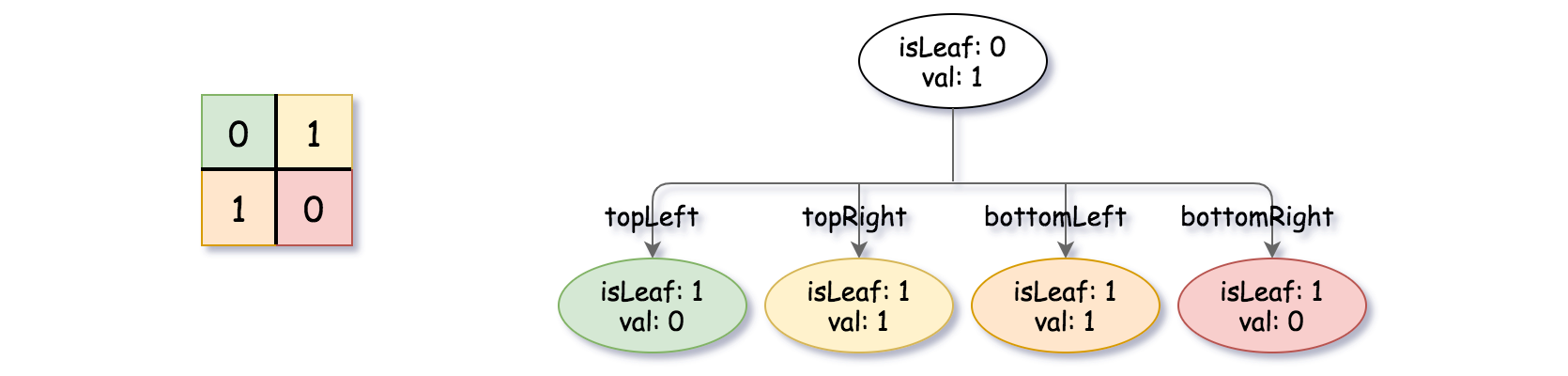
输入:grid = [[0,1],[1,0]]
输出:[[0,1],[1,0],[1,1],[1,1],[1,0]]
解释:此示例的解释如下:
请注意,在下面四叉树的图示中,0 表示 false,1 表示 True 。
示例 2:
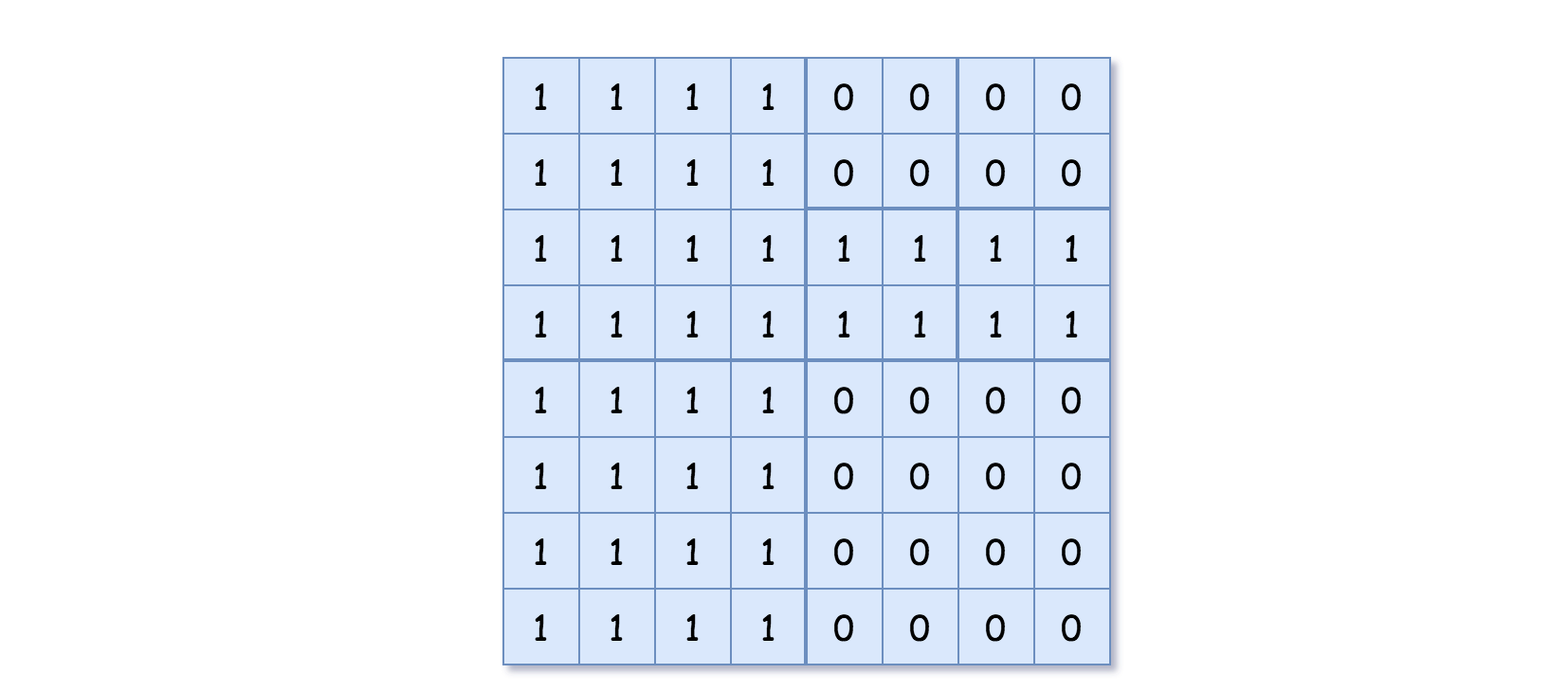
输入:grid = [[1,1,1,1,0,0,0,0],[1,1,1,1,0,0,0,0],[1,1,1,1,1,1,1,1],[1,1,1,1,1,1,1,1],[1,1,1,1,0,0,0,0],[1,1,1,1,0,0,0,0],[1,1,1,1,0,0,0,0],[1,1,1,1,0,0,0,0]]
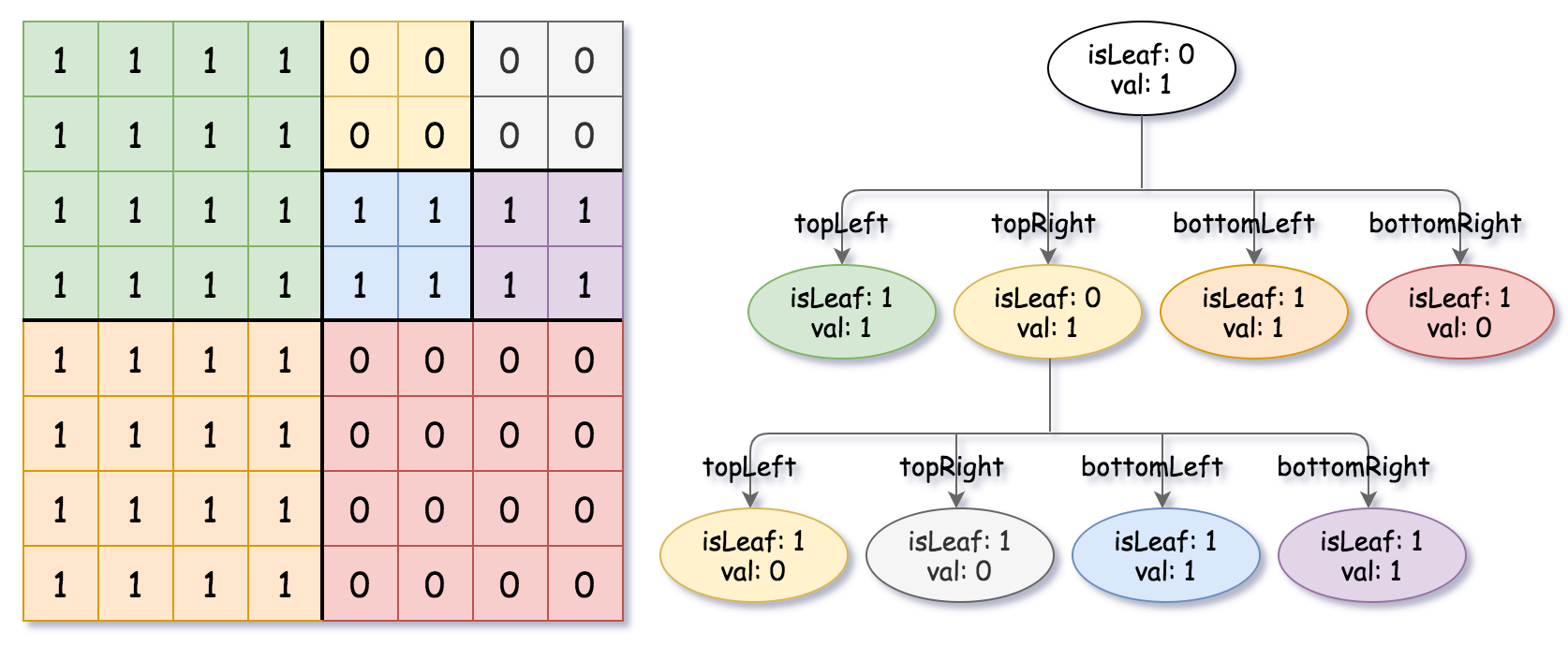
输出:[[0,1],[1,1],[0,1],[1,1],[1,0],null,null,null,null,[1,0],[1,0],[1,1],[1,1]]
解释:网格中的所有值都不相同。我们将网格划分为四个子网格。 topLeft,bottomLeft 和 bottomRight 均具有相同的值。 topRight 具有不同的值,因此我们将其再分为 4 个子网格,这样每个子网格都具有相同的值。
解释如下图所示:
提示:
- n == grid.length == grid[i].length
- n == 2x 其中 0 <= x <= 6
解法
/**
 * Definition for _Node.
 * class _Node {
 *     val: boolean
 *     isLeaf: boolean
 *     topLeft: _Node | null
 * 	topRight: _Node | null
 * 	bottomLeft: _Node | null
 * 	bottomRight: _Node | null
 * 	constructor(val?: boolean, isLeaf?: boolean, topLeft?: _Node, topRight?: _Node, bottomLeft?: _Node, bottomRight?: _Node) {
 *         this.val = (val===undefined ? false : val)
 *         this.isLeaf = (isLeaf===undefined ? false : isLeaf)
 *         this.topLeft = (topLeft===undefined ? null : topLeft)
 *         this.topRight = (topRight===undefined ? null : topRight)
 *         this.bottomLeft = (bottomLeft===undefined ? null : bottomLeft)
 *         this.bottomRight = (bottomRight===undefined ? null : bottomRight)
 *   }
 * }
 */


function construct(grid: number[][]): _Node | null {
    const n = grid.length
    // 遍历区域元素,判断是否是叶子节点
    const isLeaf = (startI: number, endI: number, startJ: number, endJ: number): boolean => {
        let val = grid[startI][startJ]
        for(let i = startI; i <= endI; i++){
            for(let j = startJ; j <= endJ; j++){
                if(val !== grid[i][j]) return false
            }
        }
        return true
    }
    const helper = (startI: number, endI: number, startJ: number, endJ: number): _Node => {
        const node = new _Node()
        node.val = (grid[startI][startJ] === 1)
        if(isLeaf(startI, endI, startJ, endJ)){ // 叶子节点没有根节点,直接返回节点
            node.isLeaf = true
            return node
        }
        const midI = Math.floor((startI + endI) / 2)
        const midJ = Math.floor((startJ + endJ) / 2)
        node.topLeft = helper(startI, midI, startJ, midJ)
        node.topRight = helper(startI, midI, midJ + 1, endJ)
        node.bottomLeft = helper(midI + 1, endI, startJ, midJ)
        node.bottomRight = helper(midI + 1, endI, midJ + 1, endJ)
        return node
    }
    return helper(0, n - 1, 0, n - 1)
};